
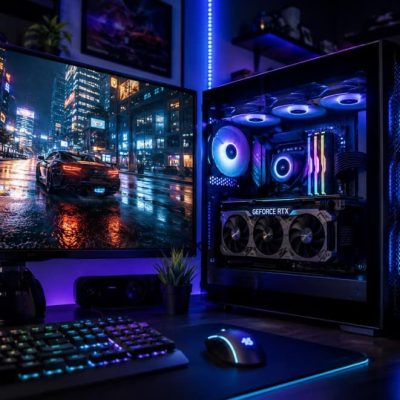
 The graphics processing unit (GPU) is one of the most important components in a gaming PC. It determines how well games look, how smoothly they run, and whether your system can handle modern visual effects. As any trusted gaming hardware blog will explain, GPU manufacturers continue to introduce technologies that improve graphics quality, increase frame rates, and make gaming more responsive as new games become increasingly demanding. Understanding these technologies can help PC gamers make better buying decisions and get the most from their hardware.
Rhttps://www.isourcevc.com/ay Tracing Creates More Realistic Lighting
Ray tracing has become one of the most talked-about GPU technologies in recent years. Traditional graphics techniques use approximations to simulate lighting, reflections, and shadows. Ray tracing takes a different approach by calculating how light naturally interacts with objects in a virtual environment.
The result is more realistic reflections, softer shadows, and improved lighting effects that add depth to games. Water surfaces reflect nearby objects more accurately, glass behaves more naturally, and indoor scenes benefit from more believable lighting.
While ray tracing delivers impressive visuals, it also requires significant processing power. Modern GPUs include dedicated hardware designed specifically to handle these calculations more efficiently, making the technology increasingly practical for everyday gaming.
AI Upscaling Improves Performance
One of the biggest challenges in gaming is balancing image quality with frame rates. Rendering games at very high resolutions can reduce performance, even on powerful graphics cards. Several GPU manufacturers now offer their own AI upscaling technologies. Although each solution works differently, the overall goal is the same: deliver smoother gameplay without requiring the graphics card to render every frame at the display’s full resolution. This technology has become especially valuable for gamers using 1440p and 4K monitors.
Frame Generation Boosts Smoothness
Frame generation is one of the newest developments in GPU technology. Instead of rendering every frame traditionally, supported graphics cards use AI to create additional frames between rendered ones.
This can significantly increase the displayed frame rate, making gameplay appear smoother, particularly in demanding titles. The technology often works alongside AI upscaling, combining higher image quality with improved performance. Although frame generation performs best on newer GPUs, it demonstrates how artificial intelligence is becoming an increasingly important part of modern graphics processing.
Variable Rate Shading Increases Efficiency
Not every part of a game scene requires the same level of detail. Background objects often receive less attention than characters or objects near the center of the screen. Variable Rate Shading (VRS) allows the GPU to apply different shading levels across different parts of the image. Areas that require fine detail receive more processing power, while less noticeable regions use fewer resources. This smarter allocation improves performance without causing obvious reductions in image quality. Many newer games include support for VRS, helping systems maintain higher frame rates during demanding scenes.
Faster Memory Improves Data Access
Modern GPUs rely on high-speed video memory, commonly known as VRAM, to store textures, models, and other graphical data. Recent graphics cards use faster memory technologies that provide greater bandwidth. This allows the GPU to move larger amounts of data more quickly, reducing delays when rendering complex scenes.
Higher memory capacity also helps with high-resolution textures, large open-world environments, and advanced visual settings. As modern games continue to increase texture quality, sufficient VRAM has become an important factor in overall gaming performance.
Better Cooling Supports Stable Performance
GPU technology extends beyond processing power. Cooling systems have also improved significantly in recent years. Modern graphics cards often feature larger heatsinks, multiple fans, vapor chamber cooling, and improved airflow designs. These cooling solutions help maintain lower operating temperatures even during long gaming sessions.
Stable temperatures allow the GPU to maintain higher performance for longer periods, rather than reducing clock speeds to prevent overheating. Quieter cooling designs also improve the overall gaming experience by reducing fan noise.
Hardware Video Encoding Benefits Streamers
Many PC gamers also create content through live streaming or video recording. Modern GPUs include dedicated hardware encoders that process video separately from the main graphics workload.
This allows gamers to stream gameplay with less impact on overall performance. The GPU handles video compression efficiently, freeing up more resources to run the game itself. Improved hardware encoding also benefits video editing, allowing creators to export projects more quickly and produce high-quality recordings with lower system demands.
Display Technologies Enhance Gameplay
Current GPUs support advanced display technologies that improve both visual quality and responsiveness. High refresh rates allow compatible monitors to display more frames each second, resulting in smoother motion. Adaptive synchronization technologies reduce screen tearing by matching the monitor’s refresh rate with the GPU’s frame output. Support for higher resolutions, wider color ranges, and high dynamic range (HDR) also contributes to a richer gaming experience. These features help modern games look more vibrant while maintaining fluid performance.
PCIe Improvements Increase Bandwidth
Graphics cards communicate with the rest of the computer through the PCI Express (PCIe) interface. Each new PCIe generation provides greater bandwidth, allowing faster data transfers between the GPU and other system components.
Although many current games do not fully use the available bandwidth of newer PCIe standards, future software and larger game assets may benefit from these improvements. Choosing compatible hardware today can also help prepare a gaming system for future upgrades.
Software Features Continue to Evolve
GPU performance is influenced not only by hardware but also by software. Graphics drivers receive regular updates that improve game compatibility, fix bugs, and optimize performance for newly released titles.
Manufacturers also provide software suites that allow users to monitor temperatures, adjust performance settings, update drivers, and customize graphics options. Some programs include automatic optimization tools that recommend settings based on a player’s hardware. Keeping GPU software up to date helps ensure games perform as efficiently as possible while supporting the latest graphics technologies.
Conclusion
Modern GPUs offer far more than faster frame rates. Technologies such as ray tracing, AI upscaling, frame generation, Variable Rate Shading, advanced cooling, and dedicated video encoding have transformed how games look and perform. At the same time, improvements in memory, display support, PCIe bandwidth, and driver software continue to enhance the overall gaming experience.
For PC gamers, understanding these technologies makes it easier to evaluate graphics cards beyond simple performance numbers. A GPU is no longer just about raw processing power—it is a combination of hardware and intelligent software working together to deliver smoother gameplay, sharper visuals, and better efficiency. As gaming technology continues to advance, staying informed about these innovations helps players make smarter upgrade decisions and enjoy the best possible experience from their systems.