
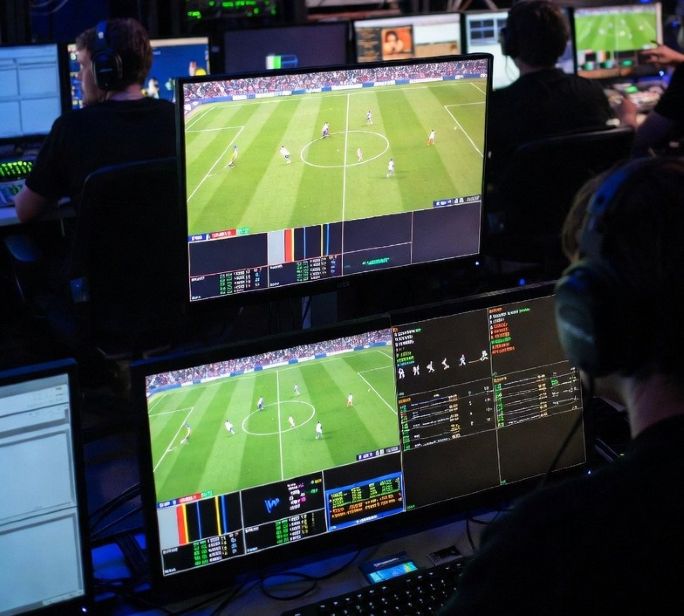
More than 3.5 billion people watch the English Premier League each season, according to league reports. That scale demands serious technology behind every whistle, replay, and goal alert. Delivering live football to millions at once takes far more than a camera and a commentator. It requires powerful servers, smart algorithms, and global networks working in sync.
Platforms like Sports Broadcast (스포츠중계) services rely on layered systems to stream English Premier League matches and other global competitions in real time. Behind the screen, engineers manage content delivery networks, reduce latency, and balance server loads so fans can switch between matches without delay. The experience may feel instant, yet it is powered by a complex web of data centers and optimization tools.
How Content Delivery Networks Keep Streams Smooth
At the core of modern live streaming is the content delivery network, often called a CDN. Companies such as Akamai Technologies and Cloudflare operate thousands of edge servers across continents. These servers store cached versions of video segments close to users. When a fan clicks play, the stream comes from the nearest server rather than a single distant location.
This shortens the distance data must travel. Less distance means lower latency and fewer buffering interruptions. During peak match hours, traffic can spike sharply. CDNs spread that load across many nodes, preventing system overload. If one server fails, traffic is redirected in seconds. That redundancy is vital for high-stakes fixtures where millions tune in at once.
Adaptive Bitrate Streaming and Buffer Control
Internet speeds vary from city to city and even from room to room. Adaptive bitrate streaming solves this challenge. The video is encoded at multiple quality levels, from standard definition to full HD or higher. The player detects a viewer’s connection speed and adjusts automatically. If bandwidth drops, resolution lowers briefly instead of freezing.
Behind this feature are encoding standards such as H.264 and H.265, widely adopted across the streaming industry. These codecs compress video efficiently while keeping picture quality sharp. Buffering algorithms monitor packet loss and jitter. When network congestion rises, the system preloads small video chunks to maintain playback stability. Viewers often never notice the shift.
CPU Management and Real-Time Processing
Live sports demand heavy processing power. Video feeds arrive from stadium cameras in high resolution. They must be encoded, packaged, encrypted, and distributed within seconds. That work is handled by clusters of servers equipped with strong CPUs and, in many cases, GPUs designed for parallel processing.
Load balancers play a key role. They distribute traffic evenly across servers so no single machine carries too much strain. During a double match window, when two or more games run simultaneously, dynamic scaling systems activate additional cloud resources. Providers like Amazon Web Services and Google Cloud offer elastic infrastructure that expands when demand rises and scales down after the final whistle.
This approach explains how a modern Sports Broadcast platform can stream multiple leagues at once. Each event is routed through separate processing pipelines. Smart orchestration software monitors performance metrics in real time. If latency increases beyond a set threshold, resources are adjusted immediately.
Fighting Latency in Global Delivery
Latency remains one of the biggest technical hurdles in live streaming. Fans expect near-instant action, especially when following live scores on social media. A delay of even 20 seconds can spoil the thrill of a goal.
Low-latency protocols such as WebRTC and optimized HTTP-based streaming formats reduce delay to just a few seconds. Engineers trim unnecessary buffering, fine-tune segment sizes, and improve routing paths between origin servers and edge nodes. Encryption adds another layer of complexity, since secure streams must protect broadcast rights without slowing delivery.
Global licensing agreements also shape technical setups. Regional restrictions require geo-blocking systems. These systems verify user locations in milliseconds while keeping the playback experience smooth.
Monitoring, Analytics, and Viewer Experience
Streaming does not end once the match begins. Real-time analytics track viewer counts, error rates, and playback quality. If a spike in buffering appears in a certain region, automated alerts notify network teams. Quick action keeps outages from spreading.
Data insights guide future upgrades. Engineers study peak usage patterns and optimize server placement. Artificial intelligence tools are now used to predict traffic surges before major derbies or title-deciding fixtures. These insights help refine Sports Broadcast operations for consistency and reliability.
The Future of Live Sports Technology
Emerging trends promise even richer matchday experiences. 5G connectivity reduces latency further and supports higher resolutions on mobile devices. Edge computing brings processing closer to viewers, minimizing round-trip delays. Immersive features such as multi-angle viewing and real-time statistics overlays are becoming standard.
Cloud-native production tools are also reshaping workflows. Remote production teams can manage graphics, commentary feeds, and highlight clips from centralized hubs rather than on-site trucks. This reduces cost and increases flexibility.
As demand for global football coverage grows, platforms must keep evolving. Faster codecs, smarter routing, and scalable cloud systems will define the next generation of streaming. The progress seen in live football coverage reflects the broader evolution of television technology, moving from simple black-and-white signals to immersive, ultra-high-definition digital streams. For fans, the goal is simple: clear video, minimal delay, and access to every match that matters.
Behind each seamless kick-off lies a network of coordinated technologies working in harmony. From CDN architecture to CPU scaling, every layer plays a part. That invisible framework is what allows a modern Sports Broadcast experience to feel effortless, even when millions are watching at the same time.